
Formal name
The Great Clock of Westminster

Westminster · 1852–1859
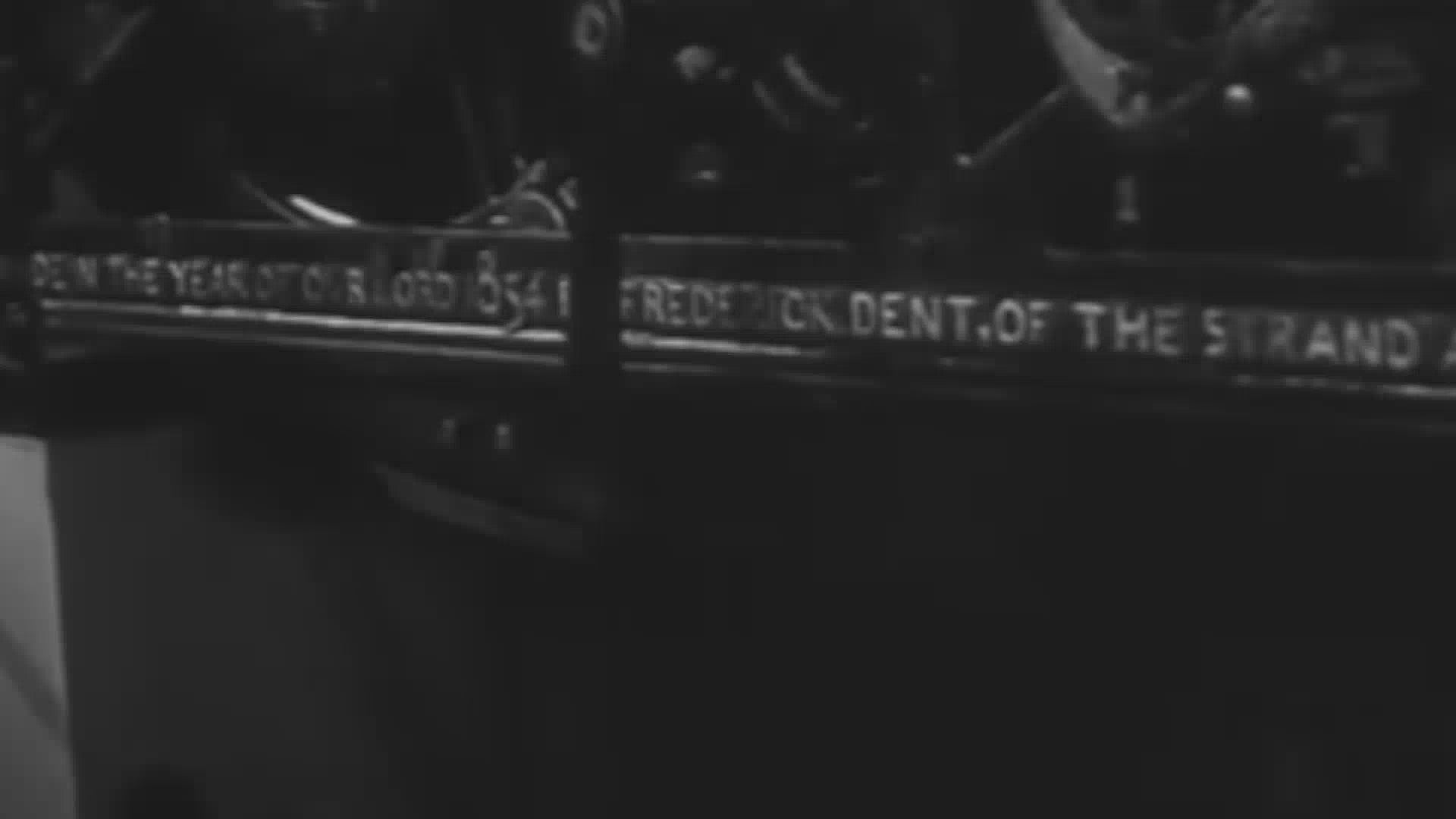
Designed by Edmund Beckett Denison. Built by the nineteenth-century workshop of Edward John Dent. Completed under Frederick Dent. A remarkable division of ideas, craft and resolve.
Design · Edmund Beckett Denison
Making · Edward John Dent’s workshop
Completion · Frederick Dent
The distinction
Strictly speaking, Big Ben is the Great Bell inside Elizabeth Tower. In everyday speech, the name is also used for the tower and the Great Clock of Westminster. The clock was conceived as a national standard: monumental in scale, yet expected to strike the hour with an accuracy of one second.
Its achievement was collaborative. Edmund Beckett Denison prepared the accepted design. Edward John Dent’s established London workshop was appointed in 1852 to build the mechanism. After Edward’s death in 1853, Frederick Dent carried the work forward to completion.
The story is strongest when every contribution is named accurately.
At a glance
A concise guide to the design, making and entry into service of the clock at the Palace of Westminster.
Formal name
The Great Clock of Westminster
Designer
Edmund Beckett Denison
Maker appointed
Edward John Dent’s workshop
Appointment recorded in 1852.
Completed under
Frederick Dent
The mechanism was completed in 1854.
Installed
April 1859
Keeping time
31 May 1859
Great Bell first heard
11 July 1859
Big Ben
13.7 tonnes
The name properly belongs to the Great Bell.
The commission · 1852
The Astronomer Royal, Sir George Airy, required a turret clock capable of striking the hour within one second. Designs prepared by Edmund Beckett Denison were accepted in February 1852, and Edward John Dent—the prominent chronometer and watchmaker—was appointed to build the mechanism.
Denison’s double three-legged gravity escapement separated the pendulum from much of the disturbance created by wind, weather and the heavy hands. The historic Dent workshop’s task was to realise that design as a dependable full-scale machine.
Scroll through the mechanism
Airy’s requirement was uncompromising: the first strike of the hour had to be correct to within a second.
Denison’s gravity escapement protected the regulating pendulum from many of the forces acting on a vast exposed turret clock.
Edward John Dent’s nineteenth-century workshop was appointed to translate the accepted design into a working mechanism.
Installed in April, the Great Clock began keeping time on 31 May. The Great Bell was first heard on 11 July.

The historical record
After the old Palace of Westminster was destroyed by fire in 1834, architect Charles Barry’s new palace required a clock worthy of the building and of a country increasingly coordinated by precise time. The challenge drew competing ideas from several leading makers before Denison’s designs were judged suitable in February 1852.
Edward John Dent’s workshop was appointed to construct the mechanism. Dent brought the standing of a leading precision maker, with experience in chronometers and regulators. His death the following year placed responsibility for completion with Frederick Dent. The mechanism was completed in 1854; installation waited until the tower’s building works were ready.
Installation followed in April 1859. The clock began keeping time on 31 May, while the Great Bell—cast separately by George Mears at the Whitechapel Bell Foundry—first struck on 11 July. Design, clockmaking, architecture and bell-founding therefore belong to related but distinct parts of the story.
This page uses “Big Ben” in the familiar public sense while preserving the formal distinction between Elizabeth Tower, the Great Clock and the Great Bell.
The sequence
These milestones describe the nineteenth-century historical record. They do not imply an unbroken corporate line to the present business.
1814
Edward John Dent establishes himself as a London watch, clock and chronometer maker.
1829
Dent chronometer No. 114 receives First Premium at the Royal Observatory trials.
1852
Denison’s designs are accepted; Edward John Dent is appointed to build the mechanism.
1853
Edward John Dent dies. Frederick Dent assumes responsibility for the commission.
1854
Frederick Dent completes the Great Clock mechanism.
1859
The mechanism is installed and the Great Clock enters service at Westminster.

The contemporary chapter
Dent London 1814 is a contemporary, independent London watch house. The Great Clock is not presented as an achievement of the present company; it is studied as an example of exacting British design, engineering and public purpose.
That reference becomes contemporary through proportion, mechanical clarity and a restrained sense of occasion—qualities expressed in watches created for the present rather than replicas of the past.
Strong geometry, legible structure and a measured presence on the wrist.
Precision treated as a design discipline, not simply a decorative theme.
A new London chapter, explicit about where history ends and the present begins.
Questions, answered
Historical dates and roles are aligned to UK Parliament’s published account. Further reading: construction history and facts and figures.
Join our private circle of collectors for exclusive event invitations, first access to new releases, and stories from the clockmaker behind Big Ben.
